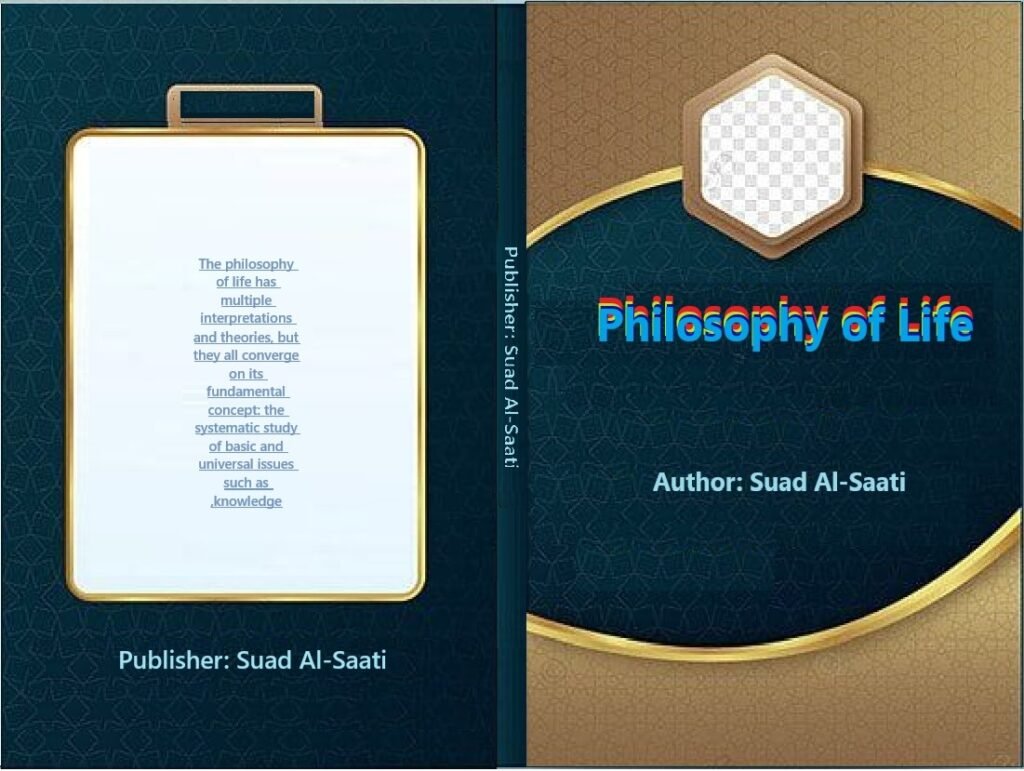
Philosophy of Life in the Modern Age
Philosophy of Life
The philosophy of life has multiple interpretations and theories, but they all converge at its core: the systematic study of fundamental and universal questions such as knowledge, reason, value, logic, and language. See Stanford Encyclopedia of Philosophy – Value Theory.
Visual Contemplation
Visual contemplation reflects the philosophy of life: the interaction between form and meaning, and between order and inquiry. The hexagonal design symbolizes balance, while the colors reflect the multiplicity of theories and the diversity of experiences. This helps us confront and understand life and avoid ambiguity. Technology supports this by analyzing and connecting ideas and generating logical reasoning. See A Philosophical Exploration of Symbolism and Meaning in Modern Artistic Practices – Scholarly Review Journal.
Critical and Rational Assumptions
The philosophy of life encompasses multiple interpretations and theories of value philosophy, but they all converge at their core: the systematic study of fundamental and universal questions such as knowledge, mind, value, logic, and language. This includes formulating critical and rational assumptions.
The concept of symbolism and multiple meanings in philosophy and art leads to a rational choice between symbolism and balance in design. It also offers a role in modern literature, within a comprehensive vision. The journal focuses on attitudes towards life, the search for meaning in these questions, and the attempt to find solutions to fundamental existential puzzles in public life and among individuals.
Modern Philosophy of Life
Technology has become an essential part of life, contributing to the development of logical thinking, as explained in the book The Philosophy of Technology and Its Significance (Sperner). A recent academic article in the journal explored the relationship between technology and philosophical thought in detail, focusing on its interaction with symbolism in the modern age and its uses in clarifying philosophical visions. See Philosophy of Technology and Why it Matters – Springer.
Moreover, this evolution has led to a more mature philosophy than before. Existentialism is a school of life, and its philosophy lies within the individual, in thinking and feeling in relation to their surroundings. It has goals for which one lives, in harmony with everyone who has goals that enable them to live freely and choose the life that suits them. Technological developments have brought about a philosophical evolution in life, and in existentialism as well
And, the philosophy of life has become clearer under modern technology Under modern technology, the philosophy of life has become clearer. In addition, symbolic expressions now help define and interpret logical perspectives. Moreover, this symbolic clarity supports individuals in confronting ambiguity and understanding life more deeply. Finally, technology enhances this process by analyzing ideas and generating coherent logical concepts
A visual reflection of my philosophy of life