The Myth of Intelligence | Introduction: When Intelligence Becomes a Myth
For centuries, intelligence was treated as a fixed, almost mythical quality-something inherited, measured, and judged through narrow academic lenses. A child who excelled in mathematics or language was labeled “intelligent,” while others were quietly pushed aside, as if human potential could be reduced to a single dimension
But intelligence, in its essence, was never a number. It was never a grade. It was never a competition
Yet somewhere along the way, the concept of intelligence became distorted, misused, and even weaponized-
The Traditional Model: Intelligence as a Single Path
Historically, intelligence was defined by
Logical reasoning♾️
Linguistic ability♾️
Mathematical performance♾️
Educational systems relied heavily on these measures. Students were trained to
Solve equations♾️
Extract roots♾️
Work with decimals♾️
Memorize rules and algorithms♾️
These skills later formed the basis of statistical programming and data-driven tasks. But the model itself was rigid, assuming that all learners think, learn, and succeed in the same way
: This was the first myth
That intelligence is a single thing, measured in a single way, and expressed through a single path
Real‑World Examples: When Intelligence Fails and When It Thrives
We see the misuse of intelligence everywhere
People who use their skills for manipulation rather than creation
Institutions that prioritize profit over purpose
Systems that reward shortcuts instead of understanding
Individuals who treat intelligence as a weapon rather than a responsibility
This is not intelligence
: This is cleverness without wisdom
True intelligence appears in quieter places
In the person who solves a problem without harming others-
In the learner who adapts despite obstacles♾️
In the creator who builds something meaningful♾️
In the thinker who uses knowledge ethically♾️
Intelligence is not what we know♾️
It is how we use what we know
Human vs. Artificial Intelligence: A Necessary Comparison
Artificial intelligence can
Process massive data♾️
Learn patterns♾️
Predict outcomes♾️
Automate tasks♾️
: But it cannot
Understand morality♾️
Feel empathy♾️
Choose integrity♾️
Carry responsibility♾️
Human intelligence carries ethical weight
AI carries computational power
The danger is not AI itself, but the human misuse of intelligence-whether natural or artificial
The Ethical Dimension: Intelligence as Responsibility
: In recent years, intelligence has been used
For hostility♾️
For revenge♾️
For manipulation♾️
For illegitimate gain♾️
This contradicts the very essence of intelligence
Because intelligence without ethics becomes destruction
Intelligence without understanding becomes chaos
Intelligence without purpose becomes noise
Understanding must come first
Then mental activity♾️
Then organization♾️
Then action♾️
This is the natural order of true intelligence
Conclusion: Reclaiming the Meaning of Intelligence
Intelligence is not a weapon♾️
It is not a tool for superiority♾️
It is not a shortcut to power♾️
It is a responsibility-to ourselves, to others, and to the world we shape
The myth of intelligence collapses the moment we recognize that
Intelligence is diverse♾️
Intelligence is ethical♾️
Intelligence is purposeful♾️
Intelligence is human♾️
And the greatest intelligence is not in knowing more
but in using what we know wisely
View more

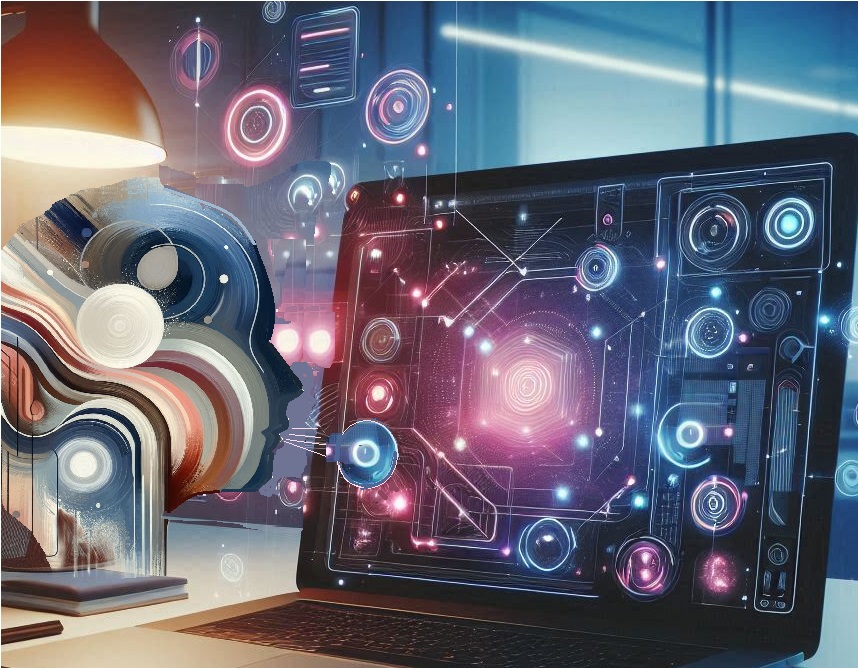
The image above captures the silent tension between human cognition and artificial systems-a tension that has shaped our understanding of intelligence for decades. As technology evolves, the boundaries between natural and manufactured intelligence blur, forcing us to rethink what it truly means to understand, to analyze, and to create. This article explores that transformation, and the myths that have shaped it.