

Building a Personal Artistic Identity

Fundamentals of Creativity

Building a Personal Artistic Identity: When Your Inner Voice Becomes a Visual Signature Introduction: An artistic identity is not a decisio

Intellectual flashes

Human Thought and Technology

Flashes of ideas: This is a hidden force that generates innovative ideas from within, and offers unconventional solutions, whether consciously or unconsciously, to identify the source of the problem and address it comprehensively and accurately.

The Complete Visual Identity

Complete Visual Identity, creative visual arts. It consists of visual elements such as an image, color, or logo to convey the idea of ​​what a particular personality or company represents. The goal is to make the idea easily recognizable, so that anyone, near or far, will immediately associate it with a specific entity or person without needing to read between the lines

Creativity – The Spark That Changes Everything

True creativity-a spark from the Creator that transforms everything-is the moment an idea is transformed into something entirely new

Principles of Visual Balance

Principles of Visual Balance
When the eye finds harmony before the mind understands the design

The Art of Creative Design

The Art of Creative Design
Where Imagination Meets Structure, and Ideas Become a Visual Language
Protection: A Space Between Art and Idea
Design is not merely an arrangement of elements on a page, nor is it simply visual to please the eye

Creativity lies in focus

The Power of Introspection in Building Inspiration Focus enhances the ability to see connections.Furthermore, moments of creativity arise from focus, unlocking latent potential.They also reveal skills we were unaware we possessed.Thus, moments of creativity, rooted in focus, unleash latent abilities.

The power of letting go

The power of letting go; letting go is not a weakness, but rather the ability to detach from things without harming oneself. Letting go is a form of conscious control: control without unhealthy attachment.

Technology as an Extension of Human Activity

Human technological thought is not a branch of philosophy,

Technology as an Extension of Human Activity

Introduction
Human activity is not limited to physical movement or practical tasks; it is an expression of awareness, intention, and the continuous effort to reorganize reality. Technology emerges from this activity as an inorganic extension of it-a systematic projection of human capabilities into forms that transcend biological limitations. This chapter explores how human actions evolve into technological systems, how the organic is reflected in the inorganic, and how this transformation reshapes the relationship between humanity and the all world

Human action as a cognitive structure

Human action as a cognitive structure
Human action is rooted in cognitive processes that interpret, evaluate, and transform experience. Every action begins as an internal state-an intention, a perception, a decision. Technology captures these internal states and translates them into external structures. This translation reveals that technology is not separate from human activity; it is the crystallization of cognitive patterns into functional systems.

Technology as an inorganic extension of organic action

The human body operates through organic mechanisms-neural signals, muscular movement, sensory feedback. Technology replicates these mechanisms in non-organic form

Sensors as extensions of perception
processors as extensions of reasoning
machines as extensions of physical capability
networks as extensions of communication

This mirroring is not imitation; it is functional translation. The organic logic of the human organism becomes encoded in technological design

The relationship between humans and machines: functional similarity, not existential similarity.

Humans and machines do not share the same essence. The human organism is alive, self-regulating, and conscious. The machine is structured, functional, and dependent. Yet despite this ontological difference, there is a functional alignment between the two:

both process inputs
both generate outputs
both operate through systems
Both rely on feedback loops

This alignment allows technology to integrate seamlessly into human activity, not as a replacement for the human, but as an extension of human function.

Technology as a transformation of consciousness into impact

Human consciousness generates ideas, intentions, and interpretations. Technology transforms these internal states into external artifacts. This transformation occurs through:

conceptualization
design
implementation
iteration

Through this process, the human mind externalizes itself. A technological system becomes a visible trace of invisible cognition-a materialization of thought

Technological action and the reshaping of reality

Technological activity does not merely extend human capability; it reorganizes the environment. Through technology, humans:

reshape space
redefine time
restructure social interaction
expand cognitive reach

This reconstructive power alters the conditions of existence. Technology becomes a medium through which humans redesign the world according to their needs, values, and aspirations.

Technology as a system evolves through human action

Technological systems evolve through continuous interaction with human activity. This evolution follows a pattern

need generates innovation
innovation generates systems
systems generate new needs
new needs generate further innovation

This cycle reveals that technology is not static; It is a dynamic extension of human evolution

Limits of reach: Where does the human stop and where does the machine begin

Despite the deep integration between humans and technology, there remains a boundary:

the human possesses consciousness, intention, and organic life
The machine possesses structure, function, and programmed logic

This boundary is not a barrier but a distinction. It preserves the uniqueness of human existence while allowing technology to amplify human potential.

And in the conclusion
Technology, as an extension of human activity, reveals the profound connection between cognition, action, and system-building. It shows how humans externalize their internal processes, translate organic logic into non-organic structures, and reshape reality through structured innovation. This chapter prepares the ground for the next exploration: the historical evolution of technological thought across civilizations and the shifting boundaries between human and machine


Read more

The Methodology of Technological Development

The human mind in the face of crises

Technological development is not a random accumulation of inventions; it is the outcome of a structured methodology rooted in human cognition. This methodology emerges from the interaction between organic systems, conceptual reasoning, and the practical demands of survival and progress. Understanding this methodological foundation is essential for explaining how technological ideas evolve into coherent systems and how civilizations transform knowledge into infrastructure, institutions, and innovation. This chapter examines the principles that govern technological development and the cognitive processes that shape its trajectory.

Technological development approach

The human mind in the face of crises

Technological development is not a random accumulation of inventions; it is the outcome of a structured methodology rooted in human cognition. This methodology emerges from the interaction between organic systems, conceptual reasoning, and the practical demands of survival and progress. Understanding this methodological foundation is essential for explaining how technological ideas evolve into coherent systems and how civilizations transform knowledge into infrastructure, institutions, and innovation. This chapter examines the principles that govern technological development and the cognitive processes that shape its trajectory.

Human Modification of Nature and the Pursuit of Truth

Privacy Policy – Suad Al-Saati Platform

Human Modification of Nature and the Pursuit of Truth, the evolution of human technological thought cannot be understood without examining the long arc of humanity’s interaction with nature. From the earliest attempts to shape the environment to the sophisticated systems of the modern era, humans have consistently transformed natural phenomena into structured knowledge. This chapter explores how the human pursuit of truth—scientific, existential, and practical—has driven the modification of nature and the emergence of technological systems. By tracing this historical and cognitive trajectory, we uncover the deep connection between human thought, natural processes, and the development of civilization.

The Cognitive Architecture of the Technological Mind

Creative technology and breaking the ice of ideas

Understanding human technological thought requires examining the cognitive architecture that enables it. Technology does not emerge from isolated acts of invention; it arises from a structured mental system capable of abstraction, pattern recognition, and conceptual transformation. This chapter explores the internal mechanisms of the mind that generate technological thinking, revealing how biological processes give rise to cognitive structures that shape technological development. By analyzing these mechanisms, we uncover the foundations upon which human innovation is built

Foundations of human technological thought

Explanatory introduction

The study of human technological thought begins with a fundamental observation: the human mind does not merely respond to the world-it reconstructs it

Throughout history, moments of intellectual stagnation have acted as catalysts for transformation, prompting individuals

and societies to reorganize their understanding of reality

This chapter explores the foundations of technological thought as a distinct cognitive phenomenon,

one that transcends the boundaries of tools and machines to reveal a deeper structure within human cognition.

By examining the roots, functions, and implications of this mode of thinking, we establish the conceptual groundwork for understanding how technology emerges from the human organism and shapes the trajectory of civilization.

Definition of human technological thought

Human technological thought can be defined as a cognitive framework through which individuals convert complexity into structured systems.

Unlike technical thinking-which focuses on the practical execution of tasks-technological thought is a higher-order process that reorganizes knowledge, identifies patterns,

and generates new conceptual models

It is not limited to engineering or computation; rather, it is a mental orientation that interprets obstacles as opportunities for innovation.

This orientation transforms raw experience into structured insight, allowing humans to create systems that extend their capabilities beyond biological limits

The roots of technological thought in the human mind

The origins of technological thought lie in the brain’s ability to navigate

uncertainty
When confronted with stagnation or cognitive blockage,

the mind engages in a process of reconfiguration, seeking new pathways through imagination, abstraction, and synthesis


This capacity for reorganization distinguishes human cognition from reactive forms

of intelligence found in nature
It enables the mind to transcend immediate sensory input and construct alternative realities-models, hypotheses, and systems-that can be tested, refined, and applied
In this sense, technological thought is rooted in the brain’s evolutionary drive to adapt and survive through conceptual innovation

The relationship between technological thought and the organic structure of man

The structure of technological systems reflects the architecture of the human brain.

Just as the brain is divided into specialized regions responsible for perception, emotion, and motor control, technological systems evolve through analogous functional divisions.

These parallels are not coincidental; they arise because technology is shaped by the same cognitive processes that govern human behavior. The human organism interprets the world through layered systems-sensory, emotional, rational-and these layers are mirrored in the design of technological frameworks. This organic–technological correspondence reveals that technology is not an external artifact but an extension of the human cognitive structure.

Technological thinking as a tool for reorganizing chaos

One of the defining features of technological thought is its ability to reorganize chaos. Rather than perceiving disorder as a threat, the technological mind treats it as a field of potential. Through classification, modeling, and system-building, the mind transforms unstructured information into coherent frameworks. This process is evident in scientific discovery, engineering design, and even social organization.

The capacity to convert chaos into order is not merely a technical skill

it is a cognitive strategy that enables humans to navigate complexity and generate sustainable solutions

The impact of technological thought on development and progress

Technological thought plays a central role in development. It bridges the gap between abstract knowledge and practical application, enabling societies to translate ideas into infrastructure, institutions, and innovations.

Development is not simply the accumulation of tools; it is the cultivation of a cognitive environment in which technological thinking can flourish

When individuals and communities adopt this mode of thought, they gain the ability to anticipate challenges, design adaptive systems

and pursue long-term progress. Thus, technological thought becomes a driver of sustainable development, shaping economic, social, and cultural transformation.

Technological thinking as a cognitive survival instinct

Beyond its cognitive and structural dimensions, technological thought functions as a survival instinct. Throughout human evolution, the ability to innovate has been essential for overcoming environmental challenges, securing resources, and ensuring continuity.

This instinct manifests not only in the creation of tools but in the development of conceptual systems that enhance decision-making and adaptability.

Technological thought, therefore, is not a luxury of advanced societies; it is a fundamental expression of the human drive to persist, evolve, and transcend limitations.

By viewing technology as a cognitive survival mechanism, we gain a deeper understanding of its role in shaping human destiny.

In conclusion

The foundations of human technological thought reveal a complex interplay between cognition, biology, and culture.

Technology emerges not as an external force

but as a structured expression of the human mind-rooted in the brain’s architecture, driven by the need to reorganize chaos, and sustained by the instinct for survival.

This chapter establishes the conceptual basis for exploring how technological thought evolves, how it shapes human experience,

and how it can be harnessed for development

The next chapter will examine the cognitive architecture that underlies this mode of thinking, offering a deeper look into the mechanisms through which the mind generates technological systems.

Read more

The human mind in the face of crises

The human mind in the face of crises

The human mind in the face of crises

Chapter Introduction
Crises are the moments when the human mind is tested to its fullest potential. When familiar paths break down and ready-made solutions collapse, a person finds themselves face to face with the unknown. Here, the difference is made between a mind that freezes in the face of shock and one that transcends it to forge a new path.

The Nature of the Human Response

The human mind doesn\’t respond to crises in a single way, but rather oscillates between two states
Stagnation and Closure: where fear or denial takes hold, and thinking stops at the limits of the problem
Flexibility and Inquiry: where pressure transforms into motivation, and the mind begins to generate unconventional solutions.
This duality is what makes crises a true test of the ability to think logically and creatively

The Role of Emotion and Biases

It cannot be denied that emotions and biases contribute to a small part of humanity\’s capabilities

Recently, they become an obstacle, when they amplify and exacerbate the problem

Within this driving force, we believe that humanity can be what it can be. But the subtle danger of biases lies in the tendency to favor one solution or to hold onto a particular viewpoint for a certain amount of time, allowing members to see what suits them best

Real-life examples

In technical crises, a team may become stuck on a software bug and assume the project has reached a dead end. However, the real solution often appears when the team rethinks the underlying logic instead of focusing on the error itself.

In production crises, a factory might shut down due to a supply chain disruption. Yet a flexible mind quickly searches for local alternatives or new distribution methods, allowing the system to recover.

In emotional crises, one person may freeze in the face of loss or trauma, while another transforms the same experience into motivation to rebuild themselves

The tools of the mind in facing crises

The human mind possesses natural tools that enable it to overcome crises. For example, brainstorming helps generate a wide range of ideas without restrictions. Additionally, comparison allows a person to weigh different options and choose the most suitable one. Through trial and error, the mind tests solutions practically until it reaches a workable result. Finally, imagination opens the door to new scenarios and possibilities that may not have been considered before.

The rigid mind versus the flexible mind

A rigid mind sees a crisis as an insurmountable wall
A flexible mind sees a crisis as a window opening onto new possibilities
The difference between them lies not in the magnitude of the problem, but in how they perceive it

Conclusion
Crises are not the end of the road, but rather the beginning of a new test for the human mind.
When the mind becomes rigid, the crisis becomes a double burden.
When the mind breaks free from rigidity, the crisis transforms into an opportunity for innovation and growth.
The human mind, in the face of crises, is a true reflection of its ability to balance emotion and logic, fear and hope, and rigidity and resilience.

Read more

The Creative Network

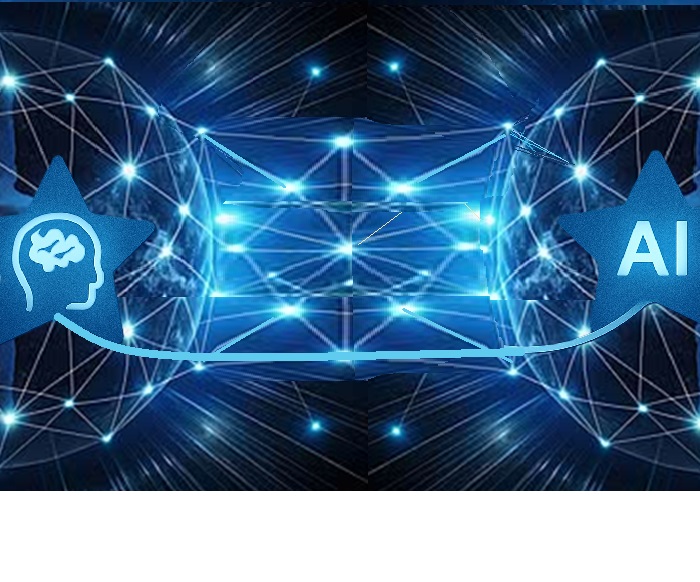
An image of the brain, a visual window connected to the threads of thought and mental growth. From this illumination, an intellectual foundation is born, opening the doors to the future, where technology transforms into bridges to awareness and creativity.

The Creative Network

Meaningful Words: Unleash even the faintest glimmer of hope, for life belongs to everyone; no one owns it. The key is to balance your rights and responsibilities,

The Evolution of Internet Protocols

The intersection between human organs and technology

The Evolution of Internet Protocols

The Evolution of Internet Protocols, Evolution of Internet Protocol standards, the Internet did not emerge suddenly; it was built on a series of protocols that gave devices the ability to communicate. From addresses that identify each terminal, to packets that carry data across networks, Instead, the Internet Protocol has always been the foundation.

In this process, In the 1980s, the world witnessed a major leap with the development of standard protocols such as TCP/IP, which became the backbone of the global network. Through the efforts of the technical community, new protocols like IETF and RDAP opened the door for artificial intelligence to integrate with databases and digital repositories.

This journey is not just a technical history, but a human story of collaboration and creativity – a story that shaped the digital space we live in today.

An Overview of the Internet Protocol and its Evolution

A protocol is a set of addresses used by terminal devices and routers. Each terminal device has at least one Network Interface Card (NIC) that carries a network address. The host, which is responsible for the network address, is called the terminal device

How Internet Protocols Structure Data

The host is the entity that owns the addresses of these networks. This is called the Internet Protocol on a single network, meaning it is multi-hosted.
As a result, In this sense, this defines a specific structure consisting of two main components

The header, which includes fields such as the source address, version number, router information, and others

The data, which contains recurring values ​​for counting and organization purposes

Previously, these packets were used without the necessary steps to establish a connection or control transmission across channels

Early Development of TCP and IP Versions

At each stage, the development of this service involved releasing standard protocol versions in stages, starting with the four versions of TCP v2, then TCP v1, and finally TCP v3. At this stage, the version was divided into two parts: local TCP v3 and IP v3

The Rise of Standard Protocols in the 1980s

In the 1980s, a crucial data transmission standard was developed using a standard protocol

The Foundations of the Modern Internet

The internet didn’t emerge overnight; it was built upon a series of protocols that enabled devices to communicate. Moreover, the addresses that identify each terminal play a crucial role in organizing the network. In addition, the packets that carry data across networks highlight how fundamental the Internet Protocol (IP) has always been.

The TCP/IP Revolution

At each stage, in the 1980s, the world experienced a significant leap forward with the development of standard protocols like TCP/IP, which became the backbone of the global network. Thanks to the efforts of the technical community, new protocols such as IETF and RDAP opened the door for artificial intelligence (AI) to integrate with databases and digital repositories.

RDAP: A New Era of Intelligent Data Access

One of the most significant developments achieved by the engineering team in the technical community was the creation of the IETF protocol, an alternative to WHOIS, known as RDAP.

Finally, this advancement revolutionized intelligent integration by enabling AI to communicate with systems containing registration data, content repositories, and other tools – all by leveraging massive volumes of structured data

View more

Read more

Thinking Outside the Box

Thinking Outside the Box Unconventional,
Awareness of Cognitive Flexibility

Creative thinking – or unconventional thinking – becomes essential when life’s pressures intensify and the mind’s capacity for clarity and sound decision‑making begins to fade. In such moments, finding new solutions requires challenging oneself

The essence of design

The essence of design lies in its fundamental nature: in genuine creativity. Through meticulous exploration and profound understanding of the surroundings, being influenced by them, and then influencing them through unique expression, the core of design emerges.