The Emergence of the Third Mind

The Emergence of the Third Mind, the mind — or intellect — is the cognitive capacity that transcends mere memory. It can be broadly described as a constellation of abilities: awareness, perception

The Emergence of the Third Mind

The emergence of the mind – or intellect -is the cognitive capacity that transcends mere memory. It can be broadly described as a constellation of abilities: awareness, perception, reasoning, and language. It is also the intellectual property of humanity, the seat of imagination and discernment, the source of evaluations that generate reactions and emotions. Through it, the body is guided, and through it, life is interpreted

When Human Thought Meets Technological Logic

When Human Thought Meets Technological Logic, through mental stimulation and intellectual activity, humans reach limits the body alone cannot. This drive pushes the mind to search for ways to achieve goals, to reflect, to question, and to continue exploring until it arrives at the threshold of technological advancement and the creation of artificial intelligence.

This innovation has enabled individuals to accomplish their objectives with unprecedented ease and precision.

The Equilibrium Between Human and Machine

Achieving balance between human cognition and machine logic creates a new form of intelligence. Instead of merging into one another, both sides contribute what the other lacks. As a result, the “third mind” becomes capable of absorbing its surroundings and weaving them into a complex chain of thought. Through this process, it forms an unconscious network that operates according to the user’s perception. Consequently, it functions as an efficient mechanism with seemingly limitless potential-much like the human mind when it transcends its own limitations through innovation.

The Spark of Interaction: A New Cognitive Energy

At certain moments, the third mind emerges not from humanity alone, nor from technology alone. Rather, it arises from the interaction between them. When these two forces meet, a new cognitive spark is generated—one that neither side could produce independently. This spark becomes the foundation for a shared intelligence that grows through cooperation, not competition.

Beyond the Human and the Machine: The Birth of a New Intelligence

Beyond the Human and the Machine: The Birth of a New Intelligence Just as electrical charges arise from the friction of objects; this third mind emerges when the surplus of human thought meets the deficiency of technological analysis-or when technology completes what human intuition cannot.

Just as electrical charges arise from the friction of objects, this third mind emerges when the surplus of human thought meets the deficiency of technological analysis-or when technology completes what human intuition cannot.

Beyond the Human and the Machine: The Birth of a New Intelligence

Beyond the Human and the Machine: The Birth of a New Intelligence, IN this exchange, neither dissolve into the other. Instead, each offers what the other lacks: the surplus gives, the deficiency receives, until equilibrium is reached and a new energy is formed-an energy that did not exist before this encounter

Beyond the Human and the Machine: The Birth of a New Intelligence, IN this exchange, neither dissolve into the other. Instead, each offers what the other lacks: the surplus gives, the deficiency receives, until equilibrium is reached and a new energy is formed-an energy that did not exist before this encounter

The Fusion That Creates What Neither Can Alone

The Fusion That Creates What Neither Can Alone, this energy is neither purely human nor purely technological. It is a state of intellectual equilibrium that opens horizons neither side could have opened alone. This is the crux of the matter
Read more

Creative Development Through Human–Technology Interaction

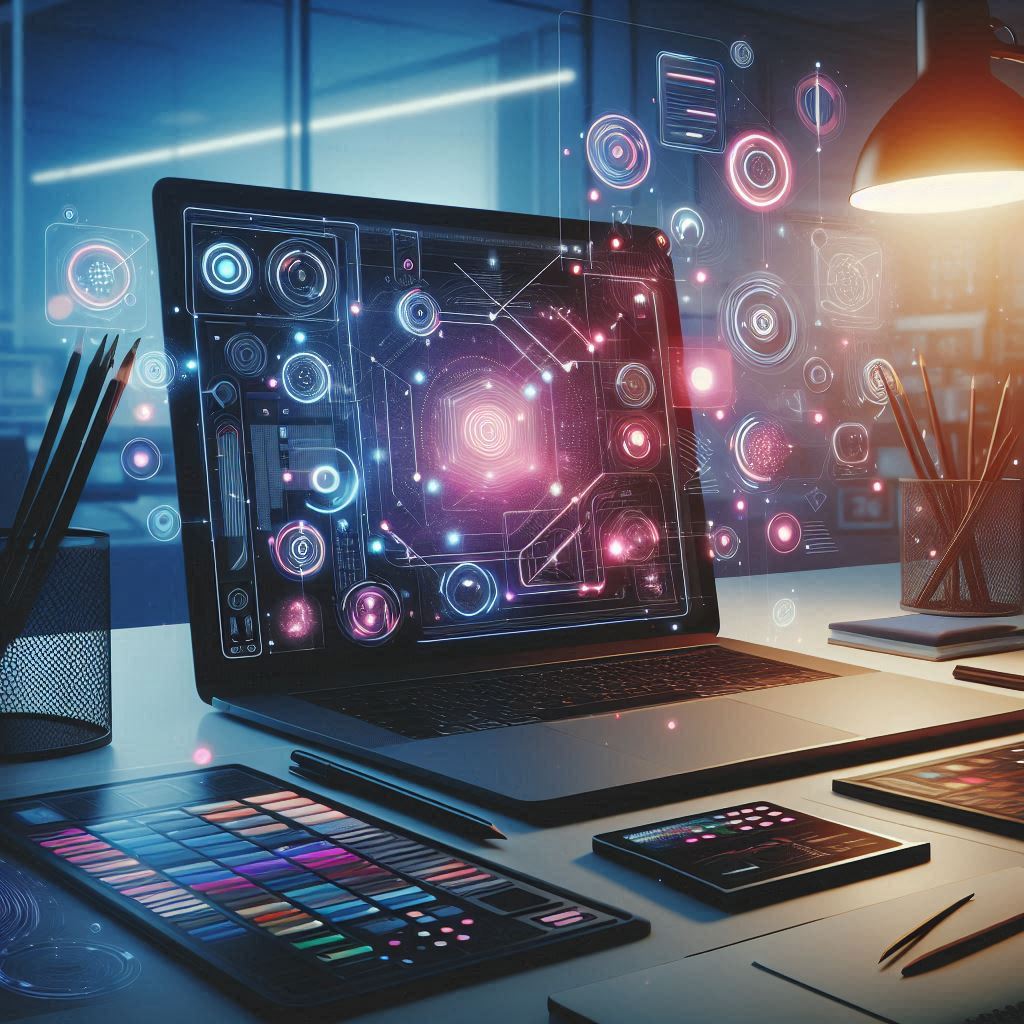
A technical image. The legacy of minds is artificial intelligence.

Creativity through humanity and technology

The Dynamics of Technological Interaction and Development

It doesn\’t come from one side, but from the interaction of elements working together to generate the Third Mind

✦ 1) It begins with the human being. The new mind isn\’t born from technology alone

It is born when

Humans dare to think outside their habits

They acknowledge their limitations

They transform their human experience into a vision

Humans are the initial spark

✦ Then comes technology as an extension, not a replacement. Technology doesn\’t create the Third Mind, but it

Expands human capabilities

Opens up spaces previously inaccessible

Grants speed, accuracy, and analytical skills that are not unique to humans

And transforms their ideas into applicable tools

Technology is the arm that reaches where the human hand cannot

✦ The Third Mind is born when the two meet. The new mind is neither purely human nor purely technological.

It is the meeting point of:

Emotion + Science

Intuition + Analysis

Experience + Data

Ethics + Competence

Vision + Execution

When humans and technology work in harmony, not in competition, a third mind emerges, capable of opening doors never before opened

✦ How do we collectively create it

In three clear steps

A) Recognize the difference instead of trying to eliminate it
Humans are not machines

And machines are not humans

When we respect this difference, we begin to build correctly

B) Consciously distribute roles.
Humans lead
Vision, Ethics, Creativity, Meaning

Technology executes
Calculation, Speed, Accuracy, Repetition

C) Create a shared space between them
A space that allows

Humans to benefit from the power of technology

Technology to be managed with human awareness

And the result to be greater than both

This space is the “third mind

✦ Conclusion
We create a new mindset when we allow humans to be human and technology to be technology, then connect them with a harmonious bridge that neither negates nor dominates the other

This third mindset is not born from humanity alone, nor from technology alone, but from the moment the two meet without negating each other.

It begins when humanity acknowledges its limitations and technology reveals its power, creating a new realm unlike either.

In this realm, human intuition guides technological analysis, and data expands human vision

When the two work in harmony, a new power emerges-neither purely human nor purely technological-a power that opens doors never before opened, because it relies on what neither can achieve alone

Read more

Towards a Third Mind: Man and Technology in a New Unity

Towards a Third Mind: Man and Technology in a New Unity

The Separation of Two Minds: Man and Technology

The Separation of Two Minds: Man and Technology

The Separation of Two Minds: Man and Technology

The intersection between human organs and techno

The intersection between human organs and technology

The intersection between human organs and technology

Chapter Introduction
In today\’s world, we see in the intersection between human organs and technology, the human mind alone no longer formulates solutions, and technology is no longer merely a silent tool. A new space is forming, where human thought intersects with technological capabilities, producing a third mind-a hybrid mind that combines human spark with machine speed

Humanity: The Spark of Technological Creativity and Emotion

In addition to the above, the intersection of humanity and technology, the human mind is the source of the initial spark
It generates ideas from experiences, emotions, and unexpected situations
It adds a human dimension that technology cannot replicate imagination, intuition, In this sense, and the ability to see beyond the numbers
But humans can also fall prey to bias or fear, which limits their ability to find solutions

Technology: Speed ​​and accuracy

Modern technology operates like a machine that knows no frequency
It analyzes data at incredible speed
It offers precise, emotionless solutions
It reveals patterns that the human mind alone could not perceive
At each stage, but technology alone lacks the human dimension; it does not understand the meaning of hope or the value of experience

Point of overlap

When humans and technology converge, an intersection occurs
Humans, driven by questions, and emerging technology
Humans are active, and technology tests them against reality
Humans define goals, and technology accelerates their attainment
This intersection doesn\’t negate these goals; rather, Finally, it fosters a new mindset capable of transcending the limitations of each

Real-life examples

AI-powered brainstorming: The team generates ideas, and then technology is used to expand or test them
Medical diagnosis: The doctor reads the case with emotion and experience, and technology analyzes the data to provide accurate probabilities
Productive projects: Humans identify the need, and technology suggests faster and more efficient ways to fulfill it

Hybrid Mind: A Vision of the Future

In this process, this convergence opens the door to a third kind of mind
A mind that combines human spark with technical precision
A mind capable of overcoming stagnation and transforming crises into opportunities
A mind that is impartial yet never loses its humanity

, Together, chapter Conclusion, the intersection of the human mind and technology is not merely collaboration, but the birth of a new mind. A mind that sees with two eyes: the human eye, which holds imagination and emotion, and the technological eye, which holds precision and speed

Instead, in this intersection, the question is no longer: Who is better? Instead, the question becomes: How can we create together solutions that neither party could have achieved alone

Read more

Turning Obstacles into Sparks

The Third Element: Human + Technology

, Turning Obstacles into Sparks
At a certain point, the body is paralyzed. Thoughts that diminish, and whose impact on the embryo, do not increase, are merely superficial. Herein lies the question: How can the mind reclaim its potential? How can an obstacle be transformed into a sparkTurning Obstacles into Sparks

Human Thought and Technology

Human Thought and Technology

Creative Technology and Breaking the Stagnation of Ideas,
halter Introduction, some point, the mind stops moving. Thoughts freeze, like solid rocks that block the light. The question then arises: how can the mind regain its flow? How can an obstacle be transformed into a spark

Creative technology and breaking the ice of ideas

Creative technology and breaking the ice of ideas

Creative technology and breaking the ice of ideas,
Creative technology, in an age of accelerating technology and interconnected minds, humanity faces an eternal question

The Creative Network

An image of the brain, a visual window connected to the threads of thought and mental growth. From this illumination, an intellectual foundation is born, opening the doors to the future, where technology transforms into bridges to awareness and creativity.

The Creative Network

Meaningful Words: Unleash even the faintest glimmer of hope, for life belongs to everyone; no one owns it. The key is to balance your rights and responsibilities,

The Evolution of Internet Protocols

The intersection between human organs and technology

The Evolution of Internet Protocols

The Evolution of Internet Protocols, Evolution of Internet Protocol standards, the Internet did not emerge suddenly; it was built on a series of protocols that gave devices the ability to communicate. From addresses that identify each terminal, to packets that carry data across networks, Instead, the Internet Protocol has always been the foundation.

In this process, In the 1980s, the world witnessed a major leap with the development of standard protocols such as TCP/IP, which became the backbone of the global network. Through the efforts of the technical community, new protocols like IETF and RDAP opened the door for artificial intelligence to integrate with databases and digital repositories.

This journey is not just a technical history, but a human story of collaboration and creativity – a story that shaped the digital space we live in today.

An Overview of the Internet Protocol and its Evolution

A protocol is a set of addresses used by terminal devices and routers. Each terminal device has at least one Network Interface Card (NIC) that carries a network address. The host, which is responsible for the network address, is called the terminal device

How Internet Protocols Structure Data

The host is the entity that owns the addresses of these networks. This is called the Internet Protocol on a single network, meaning it is multi-hosted.
As a result, In this sense, this defines a specific structure consisting of two main components

The header, which includes fields such as the source address, version number, router information, and others

The data, which contains recurring values ​​for counting and organization purposes

Previously, these packets were used without the necessary steps to establish a connection or control transmission across channels

Early Development of TCP and IP Versions

At each stage, the development of this service involved releasing standard protocol versions in stages, starting with the four versions of TCP v2, then TCP v1, and finally TCP v3. At this stage, the version was divided into two parts: local TCP v3 and IP v3

The Rise of Standard Protocols in the 1980s

In the 1980s, a crucial data transmission standard was developed using a standard protocol

The Foundations of the Modern Internet

The internet didn’t emerge overnight; it was built upon a series of protocols that enabled devices to communicate. Moreover, the addresses that identify each terminal play a crucial role in organizing the network. In addition, the packets that carry data across networks highlight how fundamental the Internet Protocol (IP) has always been.

The TCP/IP Revolution

At each stage, in the 1980s, the world experienced a significant leap forward with the development of standard protocols like TCP/IP, which became the backbone of the global network. Thanks to the efforts of the technical community, new protocols such as IETF and RDAP opened the door for artificial intelligence (AI) to integrate with databases and digital repositories.

RDAP: A New Era of Intelligent Data Access

One of the most significant developments achieved by the engineering team in the technical community was the creation of the IETF protocol, an alternative to WHOIS, known as RDAP.

Finally, this advancement revolutionized intelligent integration by enabling AI to communicate with systems containing registration data, content repositories, and other tools – all by leveraging massive volumes of structured data

View more

Read more